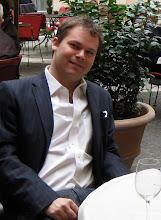
After a year long hiatus from the blog world, I'm jumping back into the fray with a new blog -
SamsRomanKitchen.com
where I will be writing about my time Gambero Rosso, Italy's culinary institute based here in Rome.
Apr 17, 2011


Feb 26, 2010
Lost but Found Again
Basilios Bessarione was an early Renaissance humanist scholar as well as tonsured monk. He spent the early part of his career in Constantinople trying to negotiate the differences between Orthodox and Roman Catholic churches which had been divided since 1054. He favored the Roman church and his view that the two churches could be easily reconciled did not bring him much favor in the Orthodox world, so he returned to Italy. In 1439 in Rome he became a cardinal. From then on he resided in Italy where he worked frequently as an envoy to foreign princes, most famously to Louis XI of France. He was held in high regard by his fellow cardinals and came close to the papacy in the election of 1455 but lost out because of his penchant for reform. He died in 1472 and was buried in Rome in the church of the Twelve Apostles.
However it is after his death where the story gets interesting.
His chapel was painted from 1464 to 1468 by Antoniazzo Romano who collaborated with Melozza da Forlí. By 1545 the frescoes were already partially covered over with a layer plaster that was put in place to stop the Tiber flood waters. By 1650 they were partially destroyed by Carlo Rianaldi's monumental altar dedicated to St. Anthony of Padua. In the 1720's the chapel was entirely lost to memory with the construction of Odescalchi chapel.
It was not until 1959, during some maintenance work on the adjacent palace, that the chapel was rediscovered. And it wasn't until 1996 that extensive excavations were completed and only in 2005 did the chapel open to the public.
The chapel, whose entrance is in the right aisle about half way down the nave, is viewed from two levels, with metal grates and glass floors allowing you to see the original foundations which date to the late 5th or early 6th century A.D. However the most interesting features are the frescoes. The space is very narrow and because of this you are hardly more than an arm's length from the images. This proximity makes pictures a little difficult but here are some of the best. There are two major images both depicting stories of the Archangel Michael.


However it is after his death where the story gets interesting.
His chapel was painted from 1464 to 1468 by Antoniazzo Romano who collaborated with Melozza da Forlí. By 1545 the frescoes were already partially covered over with a layer plaster that was put in place to stop the Tiber flood waters. By 1650 they were partially destroyed by Carlo Rianaldi's monumental altar dedicated to St. Anthony of Padua. In the 1720's the chapel was entirely lost to memory with the construction of Odescalchi chapel.
It was not until 1959, during some maintenance work on the adjacent palace, that the chapel was rediscovered. And it wasn't until 1996 that extensive excavations were completed and only in 2005 did the chapel open to the public.
The chapel, whose entrance is in the right aisle about half way down the nave, is viewed from two levels, with metal grates and glass floors allowing you to see the original foundations which date to the late 5th or early 6th century A.D. However the most interesting features are the frescoes. The space is very narrow and because of this you are hardly more than an arm's length from the images. This proximity makes pictures a little difficult but here are some of the best. There are two major images both depicting stories of the Archangel Michael.

The image above is the left side of the chapel and it confused me at first. If you look closely the arrows are actually coming at the bowmen, not flying away as they should be. As I read the sheet the nun who let us gave me the answer became clear. The bull they are aiming at is actually the Archangel Michael who appeared miraculously on Monte Gargano and when archers tried to take him down their arrows were repelled back at them.
The image on the left is a bit more complicated. It is set in France at Monte San Michele off the coast of France, where the Archangel also appeared as bull, barely visible in the top right corner of the image on the left. The setting is given away by the sandy ground, which, if you look closely, is covered in shells. At high tide that beach is under water, the island is only accessible by foot at low tide.


The image on the right shows a grouping of cardinals and bishops. The central figure with the gilded robes is Saint Auberto, bishop of Avranches, who had the dream of the bull appearing, and is depicted with the face of Cardinal Bessarione himself. Behind him stand two particularly interesting characters. In the purple robe, missing half his face, is Francesco Maria della Rovere and his nephew Giuliano della Rovere, who would later become Pope Sixtus IV and Pope Julius II, respectively. Quite powerful figures.
The chapel is a great example of how much Rome has to offer that we haven't even discovered yet. Behind any wall, under any floor board, there could be a long lost masterpiece waiting to be discovered. Fun to think about.
Feb 25, 2010
Risotto al Castelmagno
serves 2
for the rice -
3 generous hand-fulls of white rice
100 grams grated Castelmagno DOC
2 tbsp olive oil
4 cups water
2 tbsp sea salt
for the sauce -
1 small carrot, diced
1/2 celery stalk, diced
1 cup wine of your choice - something with good body is better
1/4 cup olive oil
1/4 cup flour
1. Put chopped veggies and wine in small pot and set on medium heat, let cook until reduces by half, about 20 minutes. At same time put water and salt in pot to boil.
2. In small sauce pan, heat 1/4 cup oil on medium heat and slowly whisk in flour. You need to whisk constantly and keep smelling it, once a rich nutty flavor comes out the reux is ready and came be put aside.
3. Heat 2 tbsp oil in medium size pot. Add rice and stir constantly with wood spoon until you start to hear it crackling, about 5 minutes.
4. Add about half the water to the rice and stir. Once it soaks all that up a little more. Repeat as necessary until rice is not longer hard. Turn the flame off and add the cheese. Stir until thoroughly mixed.
5. While doing step 4, finished the sauce. Strain the reduced wine to get ride of all the veggies, add back to the pan with the reux. Add the reux on tbs at a time until the sauce thickens a little, it probably won't take all the reux.
6. Put rice on plates in small mounds and drizzle sauce over in the pattern of your choosing. Drink the rest of the bottle you used for the sauce.
for the rice -
3 generous hand-fulls of white rice
100 grams grated Castelmagno DOC
2 tbsp olive oil
4 cups water
2 tbsp sea salt
for the sauce -
1 small carrot, diced
1/2 celery stalk, diced
1 cup wine of your choice - something with good body is better
1/4 cup olive oil
1/4 cup flour
1. Put chopped veggies and wine in small pot and set on medium heat, let cook until reduces by half, about 20 minutes. At same time put water and salt in pot to boil.
2. In small sauce pan, heat 1/4 cup oil on medium heat and slowly whisk in flour. You need to whisk constantly and keep smelling it, once a rich nutty flavor comes out the reux is ready and came be put aside.
3. Heat 2 tbsp oil in medium size pot. Add rice and stir constantly with wood spoon until you start to hear it crackling, about 5 minutes.
4. Add about half the water to the rice and stir. Once it soaks all that up a little more. Repeat as necessary until rice is not longer hard. Turn the flame off and add the cheese. Stir until thoroughly mixed.
5. While doing step 4, finished the sauce. Strain the reduced wine to get ride of all the veggies, add back to the pan with the reux. Add the reux on tbs at a time until the sauce thickens a little, it probably won't take all the reux.
6. Put rice on plates in small mounds and drizzle sauce over in the pattern of your choosing. Drink the rest of the bottle you used for the sauce.
"Le parole sono superflue"
One thing I've come to learn about myself, that many people have probably known for a long time, is that I'm very stubborn and when I get set to do something, little will divert me.
Yesterday I was in the market and came across a cheese I had been looking for for quite some time. It's called Castelmagno and comes from a small town in the western most corner of the Piedmont just a few miles from France. The cheese interested me because some months ago I had one of the more elegant meals I've had a restaurant in Rome and one of the dishes was Risotto al Castelmagno. A risotto Jillian and I agreed could change your life.
For awhile the name meant nothing to me. I thought it was merely from that town, until I found out about the cheese. It is only produced in smaller quantities and therefore comes with a pretty high price tag and is not found in many places.
Once I found the cheese I was determined to try to mimic this risotto. Unfortunately I had a dinner at a friend's last night. So, unable to wait until dinner tonight, the logical time for a large meal, I decided to devote a bit longer this afternoon to cooking. Little did I know what I was really getting myself into.
I have gotten quite good at making risottos of varying types and approached this like any others. I finely chopped a scallion, tossed it in a small pot with some oil and let it cook until is softened. Then I added the rice, stirring fiercely, so none would stick to the bottom of the pan, or start to brown at all. After about 5 minutes of stirring you can actually hear the rice start to crackle, meaning they are crisping up a little, toast actually. At this point I added some vegetable broth I'd made a few days ago and had in the freezer. Once the rice had soaked up the broth I added the cheese and stirred for a few more minutes until it was nice and creamy.
While doing this I was also working on a reduced red wine sauce which I made with equal parts red wine and vegetable broth. They were both ready at the same time and I plated the risotto and brought the steaming dishes to the table and my waiting roommate. We each spooned some of the sauce onto the rice and dove in. It was very good. But after working through about half of the plate we started talking about ways to do it differently.
The first problem was the rice itself. The vegetable broth took away from the delicate taste of the aged cheese. It was still good, but could have been better. The cheese by itself is delicious, but add the broth to the mix covers the delicate flavor. The next problem was the sauce, it was too liquid. When you poured it over the rice it just looked like a thin red cloudy layer, nothing all that interesting. The fixes for both these problems were fairly obvious. Make the rice with plain water and not broth, and find something to thicken the sauce. I decided a reux would work nicely.
At this point we were still just discussing what we would do differently, but with no intention of acting upon those thoughts. After we finished our plates we were still carrying on the same discussion, while mulling over the last glass of the same wine I had used for the sauce. At this point I started to realize where this was leading. Finally Domenico said, "you know with good wine I can eat to infinity." A dangerous statement, yet a classic of his. He followed that up by offering a great bottle of Montefalco Rosso to make sauce round two.
This is where my stubborn nature really kicked in. I knew what it would take to make the dish truly amazing, I still had all the ingredients on hand, and I'd be kicking myself if I didn't get it right. So back to the kitchen it was.
This time, no onions or broth in the rice, just a little oil and water, a reux (oil and flour whipped together in a small sauce pan) to thicken the reduced wine sauce and we were set.
Round two the rice was perfectly white and I put it in little mounds on our plates instead smoothed flat like before. I drizzled the thicker sauce around in concentric circles and it held its shape beautifully. A series of royal purple switchbacks against the pure white rice mountain. We both stopped for a minute and stared. Domenico took the first bit and said he wanted to keep eating but wanted to keep looking as well. Can't have your risotto and eat it too I guess. So we dug in, in silence for a minute or two. Then Domenico looked up and asked "Come se dice 'le parole sono superflue'?" (How do you say 'words are superfluous'?) which I translated, and we continued in silence.
After we finished Domenico had one more comment, just trying to see how far he could push me I think, "you know, this would also be really good with that aged balsamic vinegar..."
Yesterday I was in the market and came across a cheese I had been looking for for quite some time. It's called Castelmagno and comes from a small town in the western most corner of the Piedmont just a few miles from France. The cheese interested me because some months ago I had one of the more elegant meals I've had a restaurant in Rome and one of the dishes was Risotto al Castelmagno. A risotto Jillian and I agreed could change your life.
For awhile the name meant nothing to me. I thought it was merely from that town, until I found out about the cheese. It is only produced in smaller quantities and therefore comes with a pretty high price tag and is not found in many places.
Once I found the cheese I was determined to try to mimic this risotto. Unfortunately I had a dinner at a friend's last night. So, unable to wait until dinner tonight, the logical time for a large meal, I decided to devote a bit longer this afternoon to cooking. Little did I know what I was really getting myself into.
I have gotten quite good at making risottos of varying types and approached this like any others. I finely chopped a scallion, tossed it in a small pot with some oil and let it cook until is softened. Then I added the rice, stirring fiercely, so none would stick to the bottom of the pan, or start to brown at all. After about 5 minutes of stirring you can actually hear the rice start to crackle, meaning they are crisping up a little, toast actually. At this point I added some vegetable broth I'd made a few days ago and had in the freezer. Once the rice had soaked up the broth I added the cheese and stirred for a few more minutes until it was nice and creamy.
While doing this I was also working on a reduced red wine sauce which I made with equal parts red wine and vegetable broth. They were both ready at the same time and I plated the risotto and brought the steaming dishes to the table and my waiting roommate. We each spooned some of the sauce onto the rice and dove in. It was very good. But after working through about half of the plate we started talking about ways to do it differently.
The first problem was the rice itself. The vegetable broth took away from the delicate taste of the aged cheese. It was still good, but could have been better. The cheese by itself is delicious, but add the broth to the mix covers the delicate flavor. The next problem was the sauce, it was too liquid. When you poured it over the rice it just looked like a thin red cloudy layer, nothing all that interesting. The fixes for both these problems were fairly obvious. Make the rice with plain water and not broth, and find something to thicken the sauce. I decided a reux would work nicely.
At this point we were still just discussing what we would do differently, but with no intention of acting upon those thoughts. After we finished our plates we were still carrying on the same discussion, while mulling over the last glass of the same wine I had used for the sauce. At this point I started to realize where this was leading. Finally Domenico said, "you know with good wine I can eat to infinity." A dangerous statement, yet a classic of his. He followed that up by offering a great bottle of Montefalco Rosso to make sauce round two.
This is where my stubborn nature really kicked in. I knew what it would take to make the dish truly amazing, I still had all the ingredients on hand, and I'd be kicking myself if I didn't get it right. So back to the kitchen it was.
This time, no onions or broth in the rice, just a little oil and water, a reux (oil and flour whipped together in a small sauce pan) to thicken the reduced wine sauce and we were set.
Round two the rice was perfectly white and I put it in little mounds on our plates instead smoothed flat like before. I drizzled the thicker sauce around in concentric circles and it held its shape beautifully. A series of royal purple switchbacks against the pure white rice mountain. We both stopped for a minute and stared. Domenico took the first bit and said he wanted to keep eating but wanted to keep looking as well. Can't have your risotto and eat it too I guess. So we dug in, in silence for a minute or two. Then Domenico looked up and asked "Come se dice 'le parole sono superflue'?" (How do you say 'words are superfluous'?) which I translated, and we continued in silence.
After we finished Domenico had one more comment, just trying to see how far he could push me I think, "you know, this would also be really good with that aged balsamic vinegar..."
Feb 17, 2010
Ben Tornato!
It took me about a week to get into the kitchen once I got back to Rome, so I hadn't been in a little more than a month. Nonetheless, when I arrived everyone was glad to see me and as welcoming as ever. As soon as I entered the kitchen Antonio stopped talking to the pasta delivery guy and tossed his hands in the air saying "eccolo, ben tornato!" (there he is, welcome back).
It was Wednesday and after we caught up on what happened over the last month and discussed my time in the kitchen at Maialino in New York (which I'll write about soon) he said he really didn't have anything for me to do and sent me over to Giuseppe, who had a massive pile of artichokes to deal with. I started in on them like Giovanni had shown me, but Giuseppe immediately stopped me. I was doing everything right except for the angle of the knife when I was cutting off the leaves. Holding the stem in my hand, leaves pointing away from me, I was cutting into them at practically a 90 degree angle. Giuseppe stopped me and asked what was on the underside of the artichoke if I cut too far. Turns out it was fingers. Oops. He said you want to cut at a much shallower angle so if you cut too much the knife ends up in the air, not your finger.
I like going in the mornings because I can generally ask more questions and do more myself rather than just watch the goings on when the restaurant is really crowded. It was raining today, which means Italians don't spend more time outside than they can possibly avoid, so things like going out to eat get cut from the daily routine, so lunch was particularly slow. So it was a very educational morning.
Alfredo and I were cleaning some mussels and started talking about them. I learned that the way to tell if a mussel is fresh is by the weight. Fresh mussels are still full of water and thus weigh more. He gave me two mussels of the same size, one from today and one from yesterday, and the one from today was noticeable heavier. The mussels we were cleaning came from Sardinia, and are therefore generally larger. Spanish ones are smaller in size, and the best come from Puglia, where they have small shells but the animal itself is very large, filling the entire shell.
After the lesson on mussels we moved to fish in general. There are three ways to tell if a fish is fresh. There is not an exact science and all three must considered in judging a fish. The first is by looking at the eyes. In a truly fresh fish the eye ball still curves up from the socket. After a day or two that curve flattens out and can even become slightly concave, which means the fish is still very good, and could even be eaten raw. The final stage is when the eye takes on a cloudy color, instead of the jet black tone it has originally. At this point the fish is still edible, but shouldn't be eaten raw.
The second way to test a fish's freshness is by feeling how hard the meat is. Fresh fish meat is firm, while older meat becomes mushy. The reason for this is an acid in the meat itself that starts to break it down. The best comparison I can come up with is that poking fresh fish should feel similar to the tip of your thumb, while older fish feels like the fatty part of your hand. This is a method that comes with experience, but once you know what you're doing it seems pretty fool proof. Roberto walked into the kitchen and didn't even look at the fish in question but prodded it with his index fingered and confirmed Alfredo's feeling that it was still fresh.
The last way is the color of the skin. Fresh fish holds it's natural colors while older ones don't. This is particularly difficult because you need to know what the original colors of a fish are. There's nothing to compare what you see against except an image in your mind. Although sometimes the color will remain true to the original along the spine. Alfredo was cleaning a sea robin that was a few days old as he explained this. You could clearly see that brighter orange shades along the spine while the rest of the skin had taken on a grayer shade, muting the vibrant reds and oranges.
It was Wednesday and after we caught up on what happened over the last month and discussed my time in the kitchen at Maialino in New York (which I'll write about soon) he said he really didn't have anything for me to do and sent me over to Giuseppe, who had a massive pile of artichokes to deal with. I started in on them like Giovanni had shown me, but Giuseppe immediately stopped me. I was doing everything right except for the angle of the knife when I was cutting off the leaves. Holding the stem in my hand, leaves pointing away from me, I was cutting into them at practically a 90 degree angle. Giuseppe stopped me and asked what was on the underside of the artichoke if I cut too far. Turns out it was fingers. Oops. He said you want to cut at a much shallower angle so if you cut too much the knife ends up in the air, not your finger.
I like going in the mornings because I can generally ask more questions and do more myself rather than just watch the goings on when the restaurant is really crowded. It was raining today, which means Italians don't spend more time outside than they can possibly avoid, so things like going out to eat get cut from the daily routine, so lunch was particularly slow. So it was a very educational morning.
Alfredo and I were cleaning some mussels and started talking about them. I learned that the way to tell if a mussel is fresh is by the weight. Fresh mussels are still full of water and thus weigh more. He gave me two mussels of the same size, one from today and one from yesterday, and the one from today was noticeable heavier. The mussels we were cleaning came from Sardinia, and are therefore generally larger. Spanish ones are smaller in size, and the best come from Puglia, where they have small shells but the animal itself is very large, filling the entire shell.
After the lesson on mussels we moved to fish in general. There are three ways to tell if a fish is fresh. There is not an exact science and all three must considered in judging a fish. The first is by looking at the eyes. In a truly fresh fish the eye ball still curves up from the socket. After a day or two that curve flattens out and can even become slightly concave, which means the fish is still very good, and could even be eaten raw. The final stage is when the eye takes on a cloudy color, instead of the jet black tone it has originally. At this point the fish is still edible, but shouldn't be eaten raw.
The second way to test a fish's freshness is by feeling how hard the meat is. Fresh fish meat is firm, while older meat becomes mushy. The reason for this is an acid in the meat itself that starts to break it down. The best comparison I can come up with is that poking fresh fish should feel similar to the tip of your thumb, while older fish feels like the fatty part of your hand. This is a method that comes with experience, but once you know what you're doing it seems pretty fool proof. Roberto walked into the kitchen and didn't even look at the fish in question but prodded it with his index fingered and confirmed Alfredo's feeling that it was still fresh.
The last way is the color of the skin. Fresh fish holds it's natural colors while older ones don't. This is particularly difficult because you need to know what the original colors of a fish are. There's nothing to compare what you see against except an image in your mind. Although sometimes the color will remain true to the original along the spine. Alfredo was cleaning a sea robin that was a few days old as he explained this. You could clearly see that brighter orange shades along the spine while the rest of the skin had taken on a grayer shade, muting the vibrant reds and oranges.
Feb 12, 2010
Snow in Rome
I walked downstairs this morning for a cappuccino and a cornetto, as my fridge was still empty, and when I walked into the bar it was cold and raining. As I stood there sipping my coffee I looked out the window and noticed a speck of white floating through the air, and then another and another. By the time I left the bar it was full on snowing. I ran upstairs, grabbed my camera and headed directly for the Pantheon.
Walking there I noticed very confused Romans: traffic was slower than normal, people weren't sure whether to hold up an umbrella or put on a hat, a high heeled woman or two looked distressed about the dusting of snow on the cobblestones. I walked past Castel Sant'Angelo, turning around for this shot of St. Peter's with the Ponte Sant'Angelo in front.

From there I wound through the streets to the north of Piazza Navona and made my way to the Pantheon.


I got inside just a few minutes after it opened at 9am and it was delightfully empty. I was somewhat surprised that more people were not following my beeline path to see the snow trickling through the oculus, not that I'm complaining about sharing the space with only a dozen other people. I tried taking a few pictures of the snow coming through but it was a futile effort, my little point-and-shoot camera could not handle the intense light difference. So I sat down to write about it, and here's what I came up with, I hope it serves in the place of a photo.
Looking up into the oculus of the Pantheon, as a few chosen flakes made their way to the ground, brought a sense of extreme serenity. The flakes falling, like you yourself, had entered into a different realm, removed from the chaos outside. If you looked up directly into the circle of light and let your eyes adjust to the brightness you began to see things in greater detail. The sky above came into view, waves of snowflakes whipping by above the dome, caught in the winds some 150 feet off the ground. A few lucky flakes made it inside out of the storm, gently swirling through the oculus, as if caught in a moment of weightlessness, between the effects of gravity and the wind.
Once clear of the eye, the flakes started their slow descent to the floor, floating feather-like downward. They were visible only for a short part of their descent as the shadows increased on the way down. The column of light coming down from the oculus of the Pantheon is often called the largest column in Rome, but now the column of snow is like so many of the other columns in this city, cut short. Although this time the bottom two thirds are missing.
If you watch the hole long enough a seagull passes by, a white bird against a white sky surrounded by white flakes. While my camera could not capture the subtle differences in color, there is one in the room who could, or could have years ago. The Pantheon is the final resting place of Raphael, whom mother nature "feared to be overcome while he was living, and while he was dying, herself to die" as is written on his tombstone. In his final work, the Transfiguration, he plays with subtle variations of blues and whites. The figure of Christ is wearing blue robes, against a blue sky with blue clouds. I couldn't help but think he would have been able to capture this moment perfectly, maybe enhancing it beyond mother nature herself, confirming her fears.

However, my serene moment in the Pantheon lasted only so long. After fifteen minutes a group of Italian students came in chattering away, and ruining the almost perfect silence that the rest of us had been enjoying.
Walking there I noticed very confused Romans: traffic was slower than normal, people weren't sure whether to hold up an umbrella or put on a hat, a high heeled woman or two looked distressed about the dusting of snow on the cobblestones. I walked past Castel Sant'Angelo, turning around for this shot of St. Peter's with the Ponte Sant'Angelo in front.

From there I wound through the streets to the north of Piazza Navona and made my way to the Pantheon.


I got inside just a few minutes after it opened at 9am and it was delightfully empty. I was somewhat surprised that more people were not following my beeline path to see the snow trickling through the oculus, not that I'm complaining about sharing the space with only a dozen other people. I tried taking a few pictures of the snow coming through but it was a futile effort, my little point-and-shoot camera could not handle the intense light difference. So I sat down to write about it, and here's what I came up with, I hope it serves in the place of a photo.
Looking up into the oculus of the Pantheon, as a few chosen flakes made their way to the ground, brought a sense of extreme serenity. The flakes falling, like you yourself, had entered into a different realm, removed from the chaos outside. If you looked up directly into the circle of light and let your eyes adjust to the brightness you began to see things in greater detail. The sky above came into view, waves of snowflakes whipping by above the dome, caught in the winds some 150 feet off the ground. A few lucky flakes made it inside out of the storm, gently swirling through the oculus, as if caught in a moment of weightlessness, between the effects of gravity and the wind.
Once clear of the eye, the flakes started their slow descent to the floor, floating feather-like downward. They were visible only for a short part of their descent as the shadows increased on the way down. The column of light coming down from the oculus of the Pantheon is often called the largest column in Rome, but now the column of snow is like so many of the other columns in this city, cut short. Although this time the bottom two thirds are missing.
If you watch the hole long enough a seagull passes by, a white bird against a white sky surrounded by white flakes. While my camera could not capture the subtle differences in color, there is one in the room who could, or could have years ago. The Pantheon is the final resting place of Raphael, whom mother nature "feared to be overcome while he was living, and while he was dying, herself to die" as is written on his tombstone. In his final work, the Transfiguration, he plays with subtle variations of blues and whites. The figure of Christ is wearing blue robes, against a blue sky with blue clouds. I couldn't help but think he would have been able to capture this moment perfectly, maybe enhancing it beyond mother nature herself, confirming her fears.

However, my serene moment in the Pantheon lasted only so long. After fifteen minutes a group of Italian students came in chattering away, and ruining the almost perfect silence that the rest of us had been enjoying.
Feb 4, 2010
Umbrian Polenta
I learned this recipe in the fall on a trip to Assisi where I bought a bag of polenta al tartufo and in talking with the store owner he passed on his recipe to go with the polenta.
250 grams polenta.
3 pork sausages
250 g ground veal (noce di vitello macinato)
1 can peeled, chopped tomatoes
1 red onion
Olive oil
Salt and pepper
Grated parmesan
1. Remove sausages from casings and crumble along with veal into well-oiled pan, cook for five minutes or until browned.
2. Remove from pan, draining most of the liquid.
3. Chop onions and add to pan you cooked meat in, cook 2-to-3 minutes.
4. Add tomatoes to pan, cover and simmer for 15 minutes, adding water if necessary to keep the sauce liquid.
5. Add meat to tomato sauce, cover and simmer for 30-to-40 minutes.
6. In separate pot bring 1 liter of lightly salted water to a boil.
7. Turn heat to low, slowly add polenta, stirring regularly to avoid clumps. Cook for 30-to-40 minutes, stirring every 5 minutes, until mixture is creamy.
8. Pour polenta onto serving plates, let sit for 3-4 minutes to harden a little, cover with sauce, garnish with grated parmesan and serve immediately. Serves 4
250 grams polenta.
3 pork sausages
250 g ground veal (noce di vitello macinato)
1 can peeled, chopped tomatoes
1 red onion
Olive oil
Salt and pepper
Grated parmesan
1. Remove sausages from casings and crumble along with veal into well-oiled pan, cook for five minutes or until browned.
2. Remove from pan, draining most of the liquid.
3. Chop onions and add to pan you cooked meat in, cook 2-to-3 minutes.
4. Add tomatoes to pan, cover and simmer for 15 minutes, adding water if necessary to keep the sauce liquid.
5. Add meat to tomato sauce, cover and simmer for 30-to-40 minutes.
6. In separate pot bring 1 liter of lightly salted water to a boil.
7. Turn heat to low, slowly add polenta, stirring regularly to avoid clumps. Cook for 30-to-40 minutes, stirring every 5 minutes, until mixture is creamy.
8. Pour polenta onto serving plates, let sit for 3-4 minutes to harden a little, cover with sauce, garnish with grated parmesan and serve immediately. Serves 4
Subscribe to:
Posts (Atom)